Safeguarding in Sport: The Power of the Athlete’s Voice
Date: March 2025
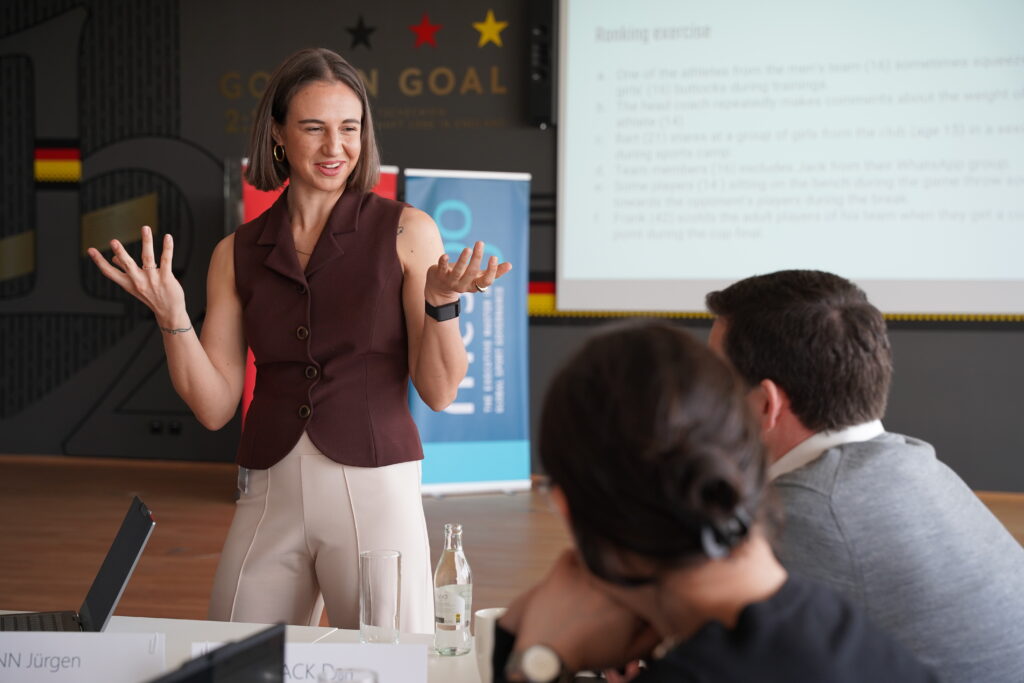
On March 24, 2025, I had the privilege of delivering a session at the Executive Master in Global Sport Governance (MESGO) in Frankfurt, alongside Giulia Pairone. Giulia, a former professional tennis player and survivor of abuse in sport, shared her powerful personal story, providing invaluable insight into the urgent need for strong and well-implemented safeguarding policies.
Our presentation combined lived experience, academic research, policy frameworks and concrete tools for strengthening safeguarding procedures and practices to show participants—executives from (inter-)national sports organizations—that safeguarding is not just a moral obligation but a fundamental pillar for building sustainable and inclusive sporting cultures.
The Athlete’s Voice: From Survivor to Changemaker
Giulia’s testimony shed light on the harsh realities of violence in sport. Her journey—from psychological and sexual abuse to struggles with eating disorders, dissociative amnesia, and PTSD—illustrates the deep and long-lasting impact of maltreatment. The fact that she filed a police report in 2019 and only in 2024 obtained the first conviction, while her offender is currently still coaching, highlights not just the long road survivors must walk but also the pressing need for structural and legal support in the sports world.
“It’s time for sport organizations to listen to the voices of survivors, both to help prevent more abuse from happening and to adequately support other survivors with trauma-informed approaches. For me, there can’t be any authentic safeguarding without putting the survivors at the center.”, says Giulia.
Picture: Dorota Łuczak, MESGO
One of the key messages of our session was that safeguarding is the responsibility of policymakers and sports organizations, and that athletes’ voices must be at the heart of the process. A survivor-centered approach, where athletes with lived experience are actively involved in policy making and implementation, is not only an act of institutional courage but also a critical step toward building credible and effective safeguarding structures.
The Scale of the Problem: Data and Reality
Research shows that 3 in 4 athletes report experiencing negative experiences related to interpersonal violence in their sports environment, and 1 in 10 face serious forms of abuse. Some athletes are at a higher risk than others: young athletes, LGBTQI+ athletes, and para-athletes are disproportionately affected. Moreover, violence in sport takes many forms—physical and sexual abuse, psychological harassment, technology-facilitated abuse, and institutional neglect.
What is still lacking is a broad public health approach: a strategy that does not just react to incidents but proactively implements mechanisms to prevent harm and promote well-being.
Picture: Dorota Łuczak, MESGO
From Policies to Action: What Works?
Effective safeguarding is more than just a written policy—it requires a dynamic and integrated approach that helps sports organizations create safe environments. In our session, we outlined some key pillars:
Multi-level prevention: The importance of preventive policies, organisational risk assessments, codes of conduct, mandatory safeguarding training for all stakeholders, accessible, safe and effective reporting mechanisms and affected persons’ wellbeing support.
Trauma-informed responses: Implementing methods that consider the impact of trauma and avoid re-traumatization during the reporting and investigation process.
Dedicated safeguarding officers: Trained professionals who serve as key contact points within sports organizations.
International collaboration: A pressing need for more coordinated and independent support structures for both survivors and sports federations worldwide.
The Way Forward
Our discussion at MESGO made one thing clear: safeguarding in sport is no longer a ‘nice-to-have’—it is an absolute necessity. Organizations that put athlete welfare at the center of their mission not only create safer environments but also foster performance, inclusion, and long-term sustainability.
As Sheldon Kennedy once said: “Policies don’t change culture—they can collect dust on the shelf. However, when athlete welfare becomes a leadership priority, you see and feel the action.”
The overwhelmingly positive feedback from MESGO participants affirmed the impact of the session. Described as “the most impactful session of the module,” it was praised for being “very powerful and important,” “thought-provoking,” and “handled with great sensitivity.” Attendees valued the unique combination of survivor testimony and practitioner insight, emphasizing how critical it is to include lived experience in conversations about safeguarding. Several participants suggested building on this foundation by including more group-based scenario discussions and culturally nuanced approaches. The strong response not only highlights the relevance of the topic, but also signals a growing readiness in the sector to move from awareness to action.
At Arch Safeguarding, we remain committed to driving this much-needed cultural shift, with athlete voices leading the way. Want to learn how your organization can strengthen its safeguarding approach? Get in touch at tine@archsafeguarding.com